Guest satisfaction is won or lost on problems hotels never hear about.
Research from Cornell, J.D. Power and leading hospitality journals shows why so much guest friction stays silent — and how a simple in-room device turns unspoken frustrations into five-star reviews and measurable direct revenue.
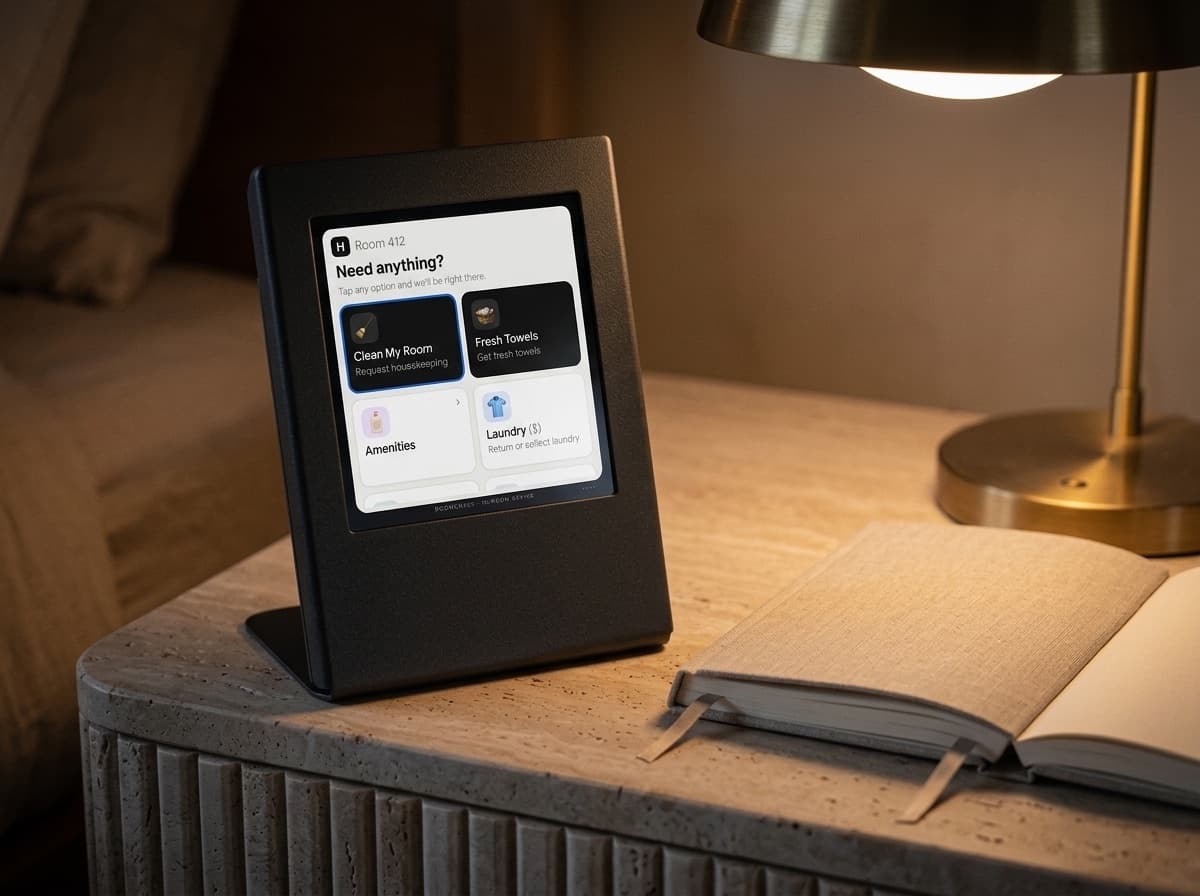
Requests without the phone call
A dedicated, unobtrusive device lets guests ask for housekeeping, extra towels or a late checkout in two taps — catching grievances before checkout.
What actually hurts guest satisfaction most?
Guest complaints follow an asymmetric penalty curve. Wi-Fi drops are frequent, but cleanliness lapses cause a rating collapse that is hard to recover from.
1Unclean room or bathroom
−213 ptsThe #1 satisfaction killer (J.D. Power). One cleanliness failure removes roughly 27% of overall guest satisfaction, weighing on every review that follows.
2Noise & disturbed sleep
57% never speak upThe #1 complaint in 19 of 20 major global cities across 2.5 million reviews (ReviewPro). Guests who sleep better rate properties 114 points higher.
3Perceived value & hidden friction
28% weightValue carries the single highest weight in overall satisfaction (J.D. Power 2024 index). Small service delays compound perceived cost.
The main negative driver at 5-star properties (Mabila et al., 2023). Unacknowledged requests cause acute dissatisfaction.
Heating and air-con problems are reported twice as often as Wi-Fi drops in boutique resort research (Wits University).
Traditional friction vs. proactive capture
A guest dials reception at 10:45 PM, is put on hold, and speaks to a night auditor who forgets to log it. The guest leaves annoyed and writes a 2-star review.
Two silent taps on the bedside device. Housekeeping gets a WhatsApp alert instantly. Fresh linen arrives in 7 minutes. The guest leaves a 5-star review.
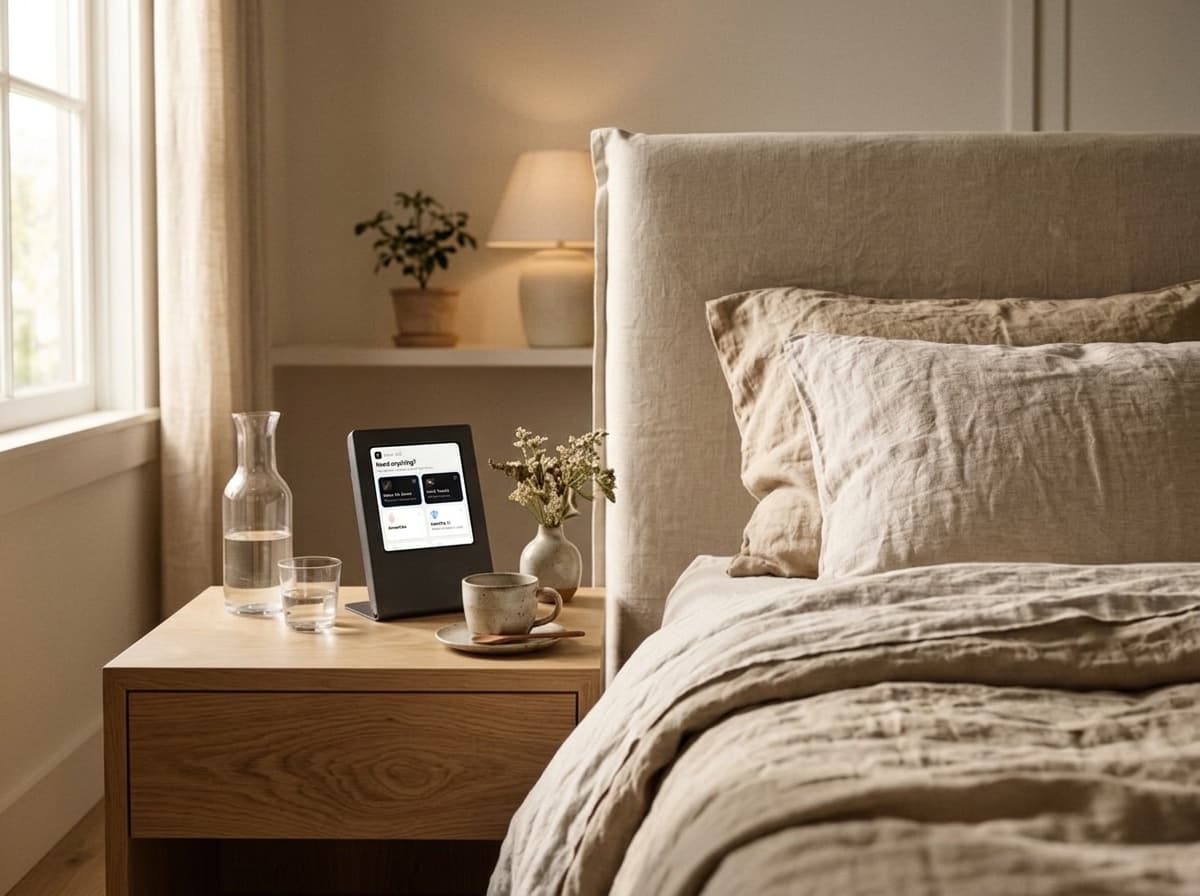
Control without confrontation
“Having a visible choice creates perceived control. Even guests who never send a request feel more looked after.” — Journal of Consumer Research
Why do guests suffer in silence instead of calling reception?
In surveys of 1,100+ hotel guests (Zingle, 2019; Au & Law, PolyU), over 45% said they avoid reporting room issues because of social friction, fear of seeming demanding, or past promises that went unfulfilled.
The guest leaves with unresolved frustration. The public review is their first and only outlet — lasting damage to your rate.
Instant acknowledgement on the device. The request goes straight to housekeeping on WhatsApp and is resolved while the guest is still on property.
Referenced by Cornell Hospitality, Purdue University & J.D. Power customer indexes.
Calculate your rating-to-revenue opportunity
Based on Anderson's Cornell study (2012) and follow-up analyses: a +0.3 review score increaselets properties capture 2% to 4% more room revenue. The cost side is RoomCheck's subscription only.
Model: annual room revenue (rooms × 365 × rate × occupancy) × 2.9% uplift for a +0.3 review score, after Anderson (Cornell, 2012): a 1% reputation gain supports up to +0.89% rate and +0.54% occupancy. Cost is RoomCheck's published subscription, excluding devices.
Projected annual return
Estimate only — actual results depend on your market and starting score.
10-room boutique guesthouse (8.0 → 8.3 on Booking.com)
| Effect | Research basis | Est. annual gain |
|---|---|---|
| More online bookings | A 3.75% rating rise yields ~1.9% higher booking conversion (Ye et al., 2011) | ~R 62,000 / yr |
| Pricing power (same occupancy) | +0.3 points on a 5-point scale supports +3.4% rate without losing demand | ~R 110,000 / yr |
| Upper-bound RevPAR lift | Combined occupancy and rate elasticity (Anderson, Cornell, 2012) | Up to R 175,000 / yr |
Warmth beats freebies: what guests actually remember.
In interviews with 208 boutique hotel guests (Torres, Fu & Lehto), 64% named genuine staff friendliness as the main driver of delight. Welcome gifts or amenity discounts accounted for only 6% to 9%.
- • Generic wine or fruit baskets
- • Defensive apologies after checkout
- • Tedious paper feedback binders
- • Imposing concierge visits
- • Prompt 5-minute request responses
- • Name recognition & remembered preferences
- • Unobtrusive bedside convenience
- • Consistent, quiet operational care
of guests across 3,618 properties say real-time, in-stay messaging raised their overall stay satisfaction (Hilton / Kipsu).
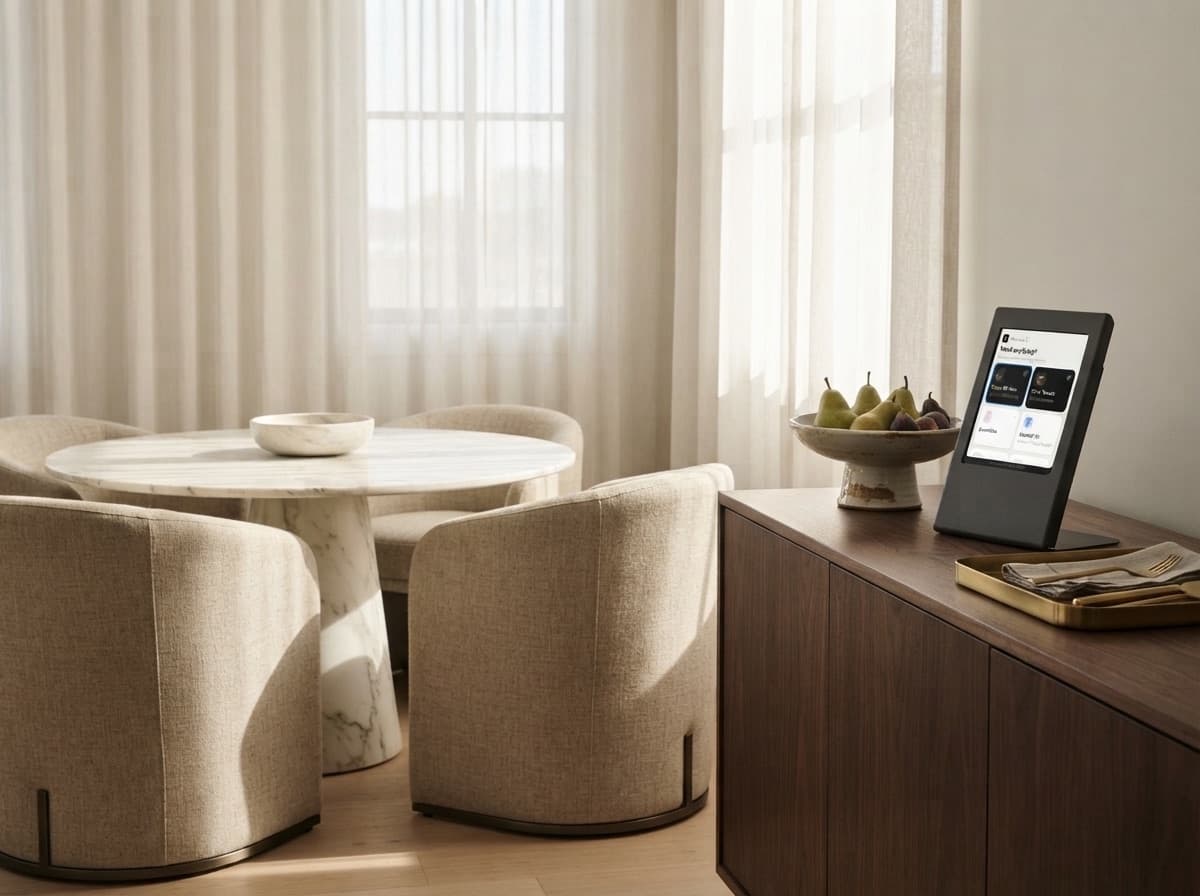
Guests browse breakfast without apps or phone queues. Zero commission taken from your kitchen.
Built for quiet hospitality, not screen addiction.
RoomCheck replaces bulky guest directories and phone lines with a purpose-built bedside device that respects the calm of the room.
Always-on presence
Sits on the bedside table. No screen locks, no apps to download, no QR codes that fail in soft mood lighting.
Two-tap request
Guests tap “Extra towels” or “Late checkout”. Instant on-screen confirmation tells them someone is on it.
WhatsApp dispatch
Routed straight to on-duty housekeeping or kitchen staff on WhatsApp. No complex training or software overhaul.
Resolution SLA
Managers see live resolution times. If a request runs past its window, automatic escalations prompt recovery.
 Springsteen Cabins · 14 cabins
“RoomCheck didn't replace our team's personal touch — it gave them the breathing room to deliver it across our secluded cabins. Our guests feel looked after, never watched.”
Industry research sources
Cornell Hospitality Quarterly
• Anderson, C. K. (2012). The Impact of Social Media on Lodging Performance. Cornell Center for Hospitality Research.
• Yoon, H. (2025). Choice, Autonomy, and Guest Perceived Value in Boutique Accommodations.
J.D. Power global studies
• J.D. Power (2010–2026). North America & European Hotel Guest Satisfaction Index Studies (14,400+ participants annually).
• J.D. Power (2024). Global Business Insights: What Hotel Study Data Can Tell You.
Journal of Consumer Research
• Hui, M. K., & Bateson, J. E. (1991). Perceived Control and the Effects of Crowding and Consumer Choice on the Service Experience.
• Jin, N. (2017). Service Recovery Windows & The 30-Minute Threshold in Luxury Hospitality.
Ready to catch guest friction before it hits Booking.com?
Put a discreet RoomCheck device in every room. Keep communication warm, housekeeping accountable, and reviews immaculate.
- No long-term lock-ins
- 1-minute room setup
- One device per room
- Trusted by 500+ rooms live