Fewer stays go wrong. When one does, it costs a third.
Hotels are getting better: problems are rarer than a decade ago. That makes each one stand out more. These are the nine detractors that do the most damage — and how they differ between budget and luxury properties.
of hotel stays had a problem in 2025 — down from 18% of guests in 2011.
J.D. Power, 2011 & 2025of satisfaction was lost when a stay did go wrong in 2025 — from 677 to 460 out of 1,000.
J.D. Power, 2025of overall satisfaction rests on value for money — the heaviest weight of any factor.
J.D. Power, 2024major cities had noise as their top hotel complaint, across 2.5 million reviews. Cape Town was the exception.
ReviewPro, 2013 · review-analytics company
Most detractors can be caught
A stain, a broken fitting, a noisy air conditioner, a dead router — most of the list is something you can check.
What does the most damage?
Ranked roughly by damage — combining how often each problem happens with how much it costs. No single dataset covers all nine, so this ranking draws on several studies.
1Unclean room or bathroom
Most damagingThe single biggest hit to satisfaction — about 27% in J.D. Power's 2014 study. Guests who rated cleanliness a perfect 10 scored their stay 113 points higher than those who gave it 8–9 (2020).
2Noise and poor sleep
Least reportedThe most common problem in 2011 and the one guests were least likely to mention. Only 29% slept better than expected; those who did scored 114 points higher (J.D. Power, 2019).
3Poor value, price and fees
Heaviest weightGuests judge everything against what they paid. Cost, fees and rooms drove the 2022 fall in satisfaction (J.D. Power, 2022).
4Staff and service failures
Upscale #1The main complaint at upscale hotels in 27,864 New York reviews (Hu et al., 2019), and a leading theme in London complaints (Sann et al., 2022).
5Worn rooms and maintenance
Budget #1The main complaint at budget hotels. Unhappy guests write about tangible things like furnishings and price; happy guests write about staff (Berezina et al., 2016).
Negative reviews were 2.24 times as likely to mention bathrooms, and almost twice as likely to mention beds (TrustYou, 2014).
Mentioned twice as often as Wi-Fi in one vendor's data (ReviewPro, 2013); at South African guesthouses and B&Bs, heat and cold were the most mentioned weather factor (Fitchett & Hoogendoorn, Wits, 2018).
Twice as common as any other problem in 2014 (J.D. Power) — frequent, but less damaging per incident than a dirty room.
Missing check-in basics — fast, accurate, warm — cost up to 100 points (J.D. Power, 2019). Odours were among 2025's named problems too.
What goes wrong depends on the property
Losses come mostly from things guests can touch: cleanliness, maintenance, beds and bathrooms.
Losses come mostly from people: delays, unhelpful staff and requests that go unanswered.

Service led the complaints
In Johannesburg five-star reviews (2019–2020), service delivery was the largest negative theme at 43%, ahead of negative stay experiences at 40% (Mabila et al., 2023 — a small sample of 186 review items).
The quiet detractor
Sleep pulls several detractors together at once — noise, beds, pillows, temperature and linen. In 2019, only 29% of guests slept better than expected, and those guests rated their stay 114 points higher (J.D. Power, 2019).
Noise is common and rarely reported, so it quietly drags down sleep — and the score — without staff ever knowing.
Most sleep problems have physical fixes, and they're among the best investments a property can make.
In South Africa's smaller properties, heat and cold drew more comment than any other weather factor — fans, heaters, air-conditioning and bedding all matter (Fitchett & Hoogendoorn, 2018).
Check the top detractors before every arrival
Most of the list is physical and checkable. A short pre-arrival routine catches much of it before a guest ever notices.
- • Checking only that the bed is made
- • Leaving small maintenance until it's a complaint
- • Surprise fees at checkout
- • Assuming no complaints means good sleep
- • Cleanliness and the bathroom first
- • Bed, pillows, blackout and quiet
- • Temperature control, Wi-Fi and smell
- • A running maintenance list, fixed before guests mention it
could be lost at check-in alone when speed, accuracy or a warm welcome was missing (J.D. Power, 2019).

Value carries more weight than anything else. Deliver what the listing promises, and leave out the surprise fees.
What the research doesn't say
Where the evidence is weaker than a catchy headline would suggest.
The ranking is a judgement
No recent source ranks every problem by both frequency and damage. This ranking combines several studies.
Compare percentages, not points
J.D. Power point figures from different years are on different scales.
Some data is vendor and older
The ReviewPro, TrustYou and Shiji figures are vendor data, and some are over 10 years old.
Cape Town's exception
In ReviewPro's 2013 data, noise wasn't Cape Town's top complaint — but the source doesn't say what was.
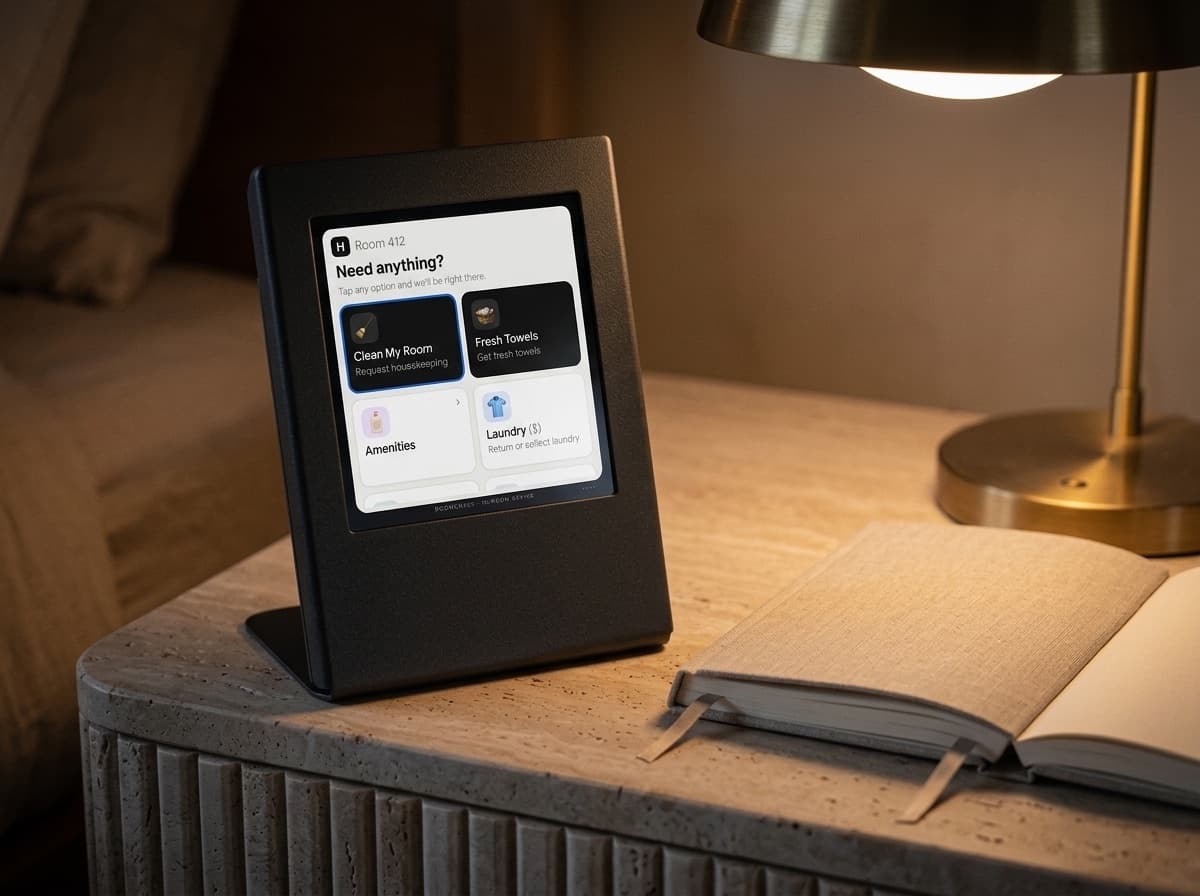
How RoomCheck helps
Most of the top detractors are physical: a stain, a broken fitting, a noisy air conditioner, a router that's dropped out. A good pre-arrival check catches many of them.
RoomCheck helps with the ones that slip through. Guests can flag a problem from the room in a few taps, and the right team hears about it straight away, so the fix happens during the stay rather than showing up in a review.
- Guests flag physical problems from the room
- Maintenance and housekeeping alerted directly
- Fixed during the stay, not after it
Industry research sources
J.D. Power studies
• J.D. Power (2011). North America hotel guest satisfaction study.
• J.D. Power (2013). Hotel guest satisfaction study: Wi-Fi problems.
• J.D. Power (2014). Hotel guest satisfaction study: the cost of an unclean room.
• J.D. Power (2019). North America Hotel Guest Satisfaction Index Study.
• J.D. Power (2020). Cleanliness and communication continue to drive hotel guest satisfaction.
• J.D. Power (2022). North America Hotel Guest Satisfaction Index Study.
• J.D. Power (2023). North America Hotel Guest Satisfaction Index Study.
• J.D. Power (2024). North America Hotel Guest Satisfaction Index Study.
• J.D. Power (2025). North America Hotel Guest Satisfaction Index Study.
Academic research
• Hu et al. (2019). Hotel complaints by star class in online reviews.
• Sann et al. (2022). Complaint themes in 1,992 London hotel reviews.
• Berezina et al. (2016). What satisfied and dissatisfied hotel guests write about.
• Mabila et al. (2023). Guest reviews of Johannesburg five-star hotels.
• Fitchett & Hoogendoorn, Wits (2018). Does sunny South Africa really have an ideal climate for tourism?.
Industry & vendor data
• ReviewPro (2013). Top hotel complaints across 2.53 million reviews in 20 cities.
• TrustYou (2014). Understanding bad reviews.
More from the research series

Warmth beats freebies: what really makes guests feel special
What really delights guests in their own words, why arrival shapes the whole stay, and what B&B guests write about most.

Just ask: the research on raising your review score
How asking every guest added 34% more reviews, how to reply to a bad review, and why replying to everything backfires.

The 27% problem: why an unclean room hurts more than anything else
One unclean room can cost about a quarter of a guest's satisfaction. Why cleanliness works like a threshold, and why bathrooms decide so many reviews.
Ready to catch guest friction before it hits Booking.com?
Put a discreet RoomCheck device in every room. Keep communication warm, housekeeping accountable, and reviews immaculate.
- No long-term lock-ins
- 1-minute room setup
- One device per room
- Trusted by 500+ rooms live