Guests remember warmth, not freebies.
Ask guests what made a stay special and they rarely mention the welcome basket. They talk about people. The research on delight, recognition and first impressions — and why small properties are best placed to win.
of women interviewed (and 55% of men) named staff friendliness as the top cause of delight in a stay.
Torres, Fu & Lehto, 2014of the same guests named a surprise as what delighted them — fewer than one in ten.
Torres, Fu & Lehto, 2014spent per stay by fully engaged hotel guests, against $403 by everyone else.
Gallup, 2014of guests said their stay felt highly personalised — the lowest-scoring part of the stay.
Medallia, 2024 · experience-software company
Consistent warmth wins
When guests describe their best moments, they talk about friendly, flexible, helpful staff — far more than upgrades.
People, not perks
When researchers ask guests to describe their best hotel moments, the same themes come back: friendliness, professionalism, flexibility and problems solved.
1Friendliness
55–64%The top cause of delight. In 95,000 reviews of independent hotels, top-rated reviews kept using the words "friendly" and "helpful" (Zhang & Verma, Cornell).
2Professional, flexible service
45–49%Staff who know their job — and bend the rules sensibly when a guest needs it.
3Free amenities or upgrades
7–21%Named by 7% of women and 21% of men. Real, but well behind the human side of the stay.
4Surprises
6–9%Fewer than one in ten guests named a surprise as the source of their delight.
Staff service was the highest-scoring part of the stay in every hotel segment — warmth is now the standard guests compare against.
79% of guests who strongly agreed their hotel cared about their well-being were fully engaged, against 6% of those who disagreed.
The gift vs the gesture
Pleasant, but identical in every room. And upgrades handed out in front of other guests can even make people uneasy (Jiang, Hoegg & Dahl, 2013).
"Welcome back — rooibos and a late breakfast again?" It costs nothing, and it's what guests describe when they talk about a stay they loved.
What B&B guests write about
In 13,241 B&B reviews, "host" was the most central word (Zhang et al., 2021). In rural stays, guests valued breakfast, friendliness, the hosts and outdoor space most (Esteves et al., 2021).
The first five minutes shape the stay
People tend to judge experiences by their high point and their end (Alaybek et al., 2022). But in a field study of more than 5,000 hotel stays, the first impression carried the most weight of all (McCullough et al., 2024).
A poor start colours what follows. Guests look for confirmation of their first impression.
A smooth, warm welcome buys patience if something small goes wrong later.
Asking guests to handwrite a comment at checkout led to higher Booking.com ratings later — 7.32 against 6.77 (Tassiello et al., 2018, 120 guests).
Recognition is the cheapest way to stand out
Guests value being remembered, yet few experience it: in one survey, 59% of returning UK guests said they weren't recognised (Mews, 2022, vendor). Owner-run properties are best placed to close that gap — but keep contact optional. About a third of guests dislike hosts who are too frequent or too personal (Foroudi et al.).
- • Generic gifts, identical in every room
- • Public upgrades that make guests uneasy
- • Check-ins guests didn't ask for
- • Forgetting returning guests' preferences
- • Hire for warmth and let staff be flexible
- • Use names and record preferences
- • A flawless arrival: room ready, no waiting
- • A short, personal thank-you after the stay
hotels studied: a brief thank-you after the stay, and a personal apology when something went wrong, improved satisfaction on later stays (Anderson & Han, Cornell, 2021).

A study of 340 guests found local guest houses weren't yet creating distinctive, personalised experiences (Coetzee, University of Pretoria, 2015).
What the research doesn't say
Where the evidence is weaker than a catchy headline would suggest.
Freebies still have a place
Gifts matter less than warmth, and work best when personal and private. Surprise rewards delighted more than discounts in one study.
The name study measured tips
The finding on introducing yourself and using names comes from restaurant tipping, not hotel satisfaction.
Several studies are small
Some samples are 101 to 208 guests, or qualitative. Read them as findings, not universal rules.
Peak-end findings are mixed
One study of 691 trips found the average of the whole trip predicted ratings better. The hotel-specific evidence favours first impressions.
Welcome drinks are untested
No research was found on welcome drinks or welcome notes specifically.
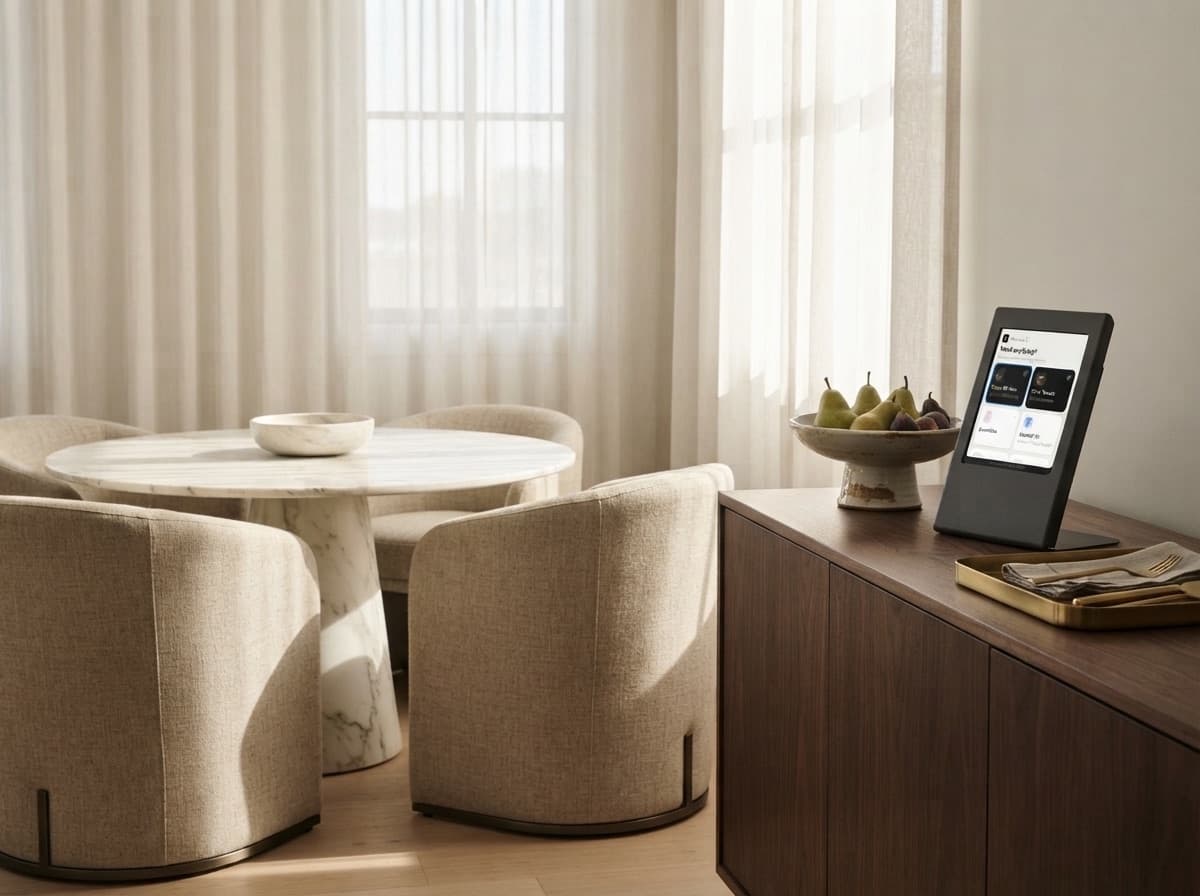
How RoomCheck helps
Warmth takes staff time — and routine requests are where much of that time goes.
RoomCheck takes some of the routine off your team's plate. Extra towels, a late checkout or a room that needs attention arrive as clear requests on WhatsApp instead of phone calls and trips to the desk, so more of your team's time goes into the personal moments guests remember.
- Routine requests handled without phone calls
- Staff freed for the personal touches
- Guests ask without interrupting anyone
Industry research sources
Guest delight research
• Torres, Fu & Lehto (2014). Examining key drivers of customer delight in a hotel experience.
• Torres & Kline (2013). Customer delight in hotel guest letters.
• Magnini et al. (2011). Pleasant surprises in hotel blog posts.
• Zhang & Verma, Cornell (n.d.). What matters most to your guests: an exploratory study of online reviews.
• Gallup (2014). Engage hotel guests by taking care of them.
• Seiter et al. (2016). Names, introductions and restaurant tips.
• Ariffin et al. (2018). Personalisation and luxury-hotel guest satisfaction.
• Wu, Mattila & Hanks (2015). Investigating the impact of surprise rewards on consumer response.
• Jiang, Hoegg & Dahl (2013). Do surprise upgrades make us uneasy?.
• Kim, Vogt & Knutson (2015). Satisfaction, delight and loyalty.
Arrival, memory & hosts
• Yoon (2025). Let me show you your room: choice and guest ownership.
• Alaybek et al. (2022). Peak-end effects: a meta-analysis.
• McCullough et al. (2024). First impressions in 5,000+ hotel stays.
• Chark et al. (2020). The journey from episode to evaluation.
• Tassiello et al. (2018). How handwriting reduces negative online ratings.
• Anderson & Han, Cornell (2021). Customer engagement and long-term loyalty.
• Zhang et al. (2021). What B&B guests write about in 13,241 reviews.
• Esteves et al. (2021). What guests value in rural stays.
• Foroudi et al., via Brunel University (n.d.). What makes the ideal Airbnb host.
• Coetzee, University of Pretoria (2015). Guest experiences at South African guest houses (master's dissertation).
Industry & vendor data
• J.D. Power (2023). North America Hotel Guest Satisfaction Index Study.
• J.D. Power (2026). North America Hotel Guest Satisfaction Index Study.
• TrustYou (2017). Top drivers of positive hotel reviews.
• Medallia (2024). Hotel guest personalisation survey.
• Mews (2022). Hotels losing revenue by failing to personalise stays.
More from the research series
Just ask: the research on raising your review score
How asking every guest added 34% more reviews, how to reply to a bad review, and why replying to everything backfires.

The 27% problem: why an unclean room hurts more than anything else
One unclean room can cost about a quarter of a guest's satisfaction. Why cleanliness works like a threshold, and why bathrooms decide so many reviews.
The silent majority: most unhappy guests never tell you
Your unhappy guests won't tell you, but they will tell Booking.com. Why guests stay silent, and what makes them speak up.
Ready to catch guest friction before it hits Booking.com?
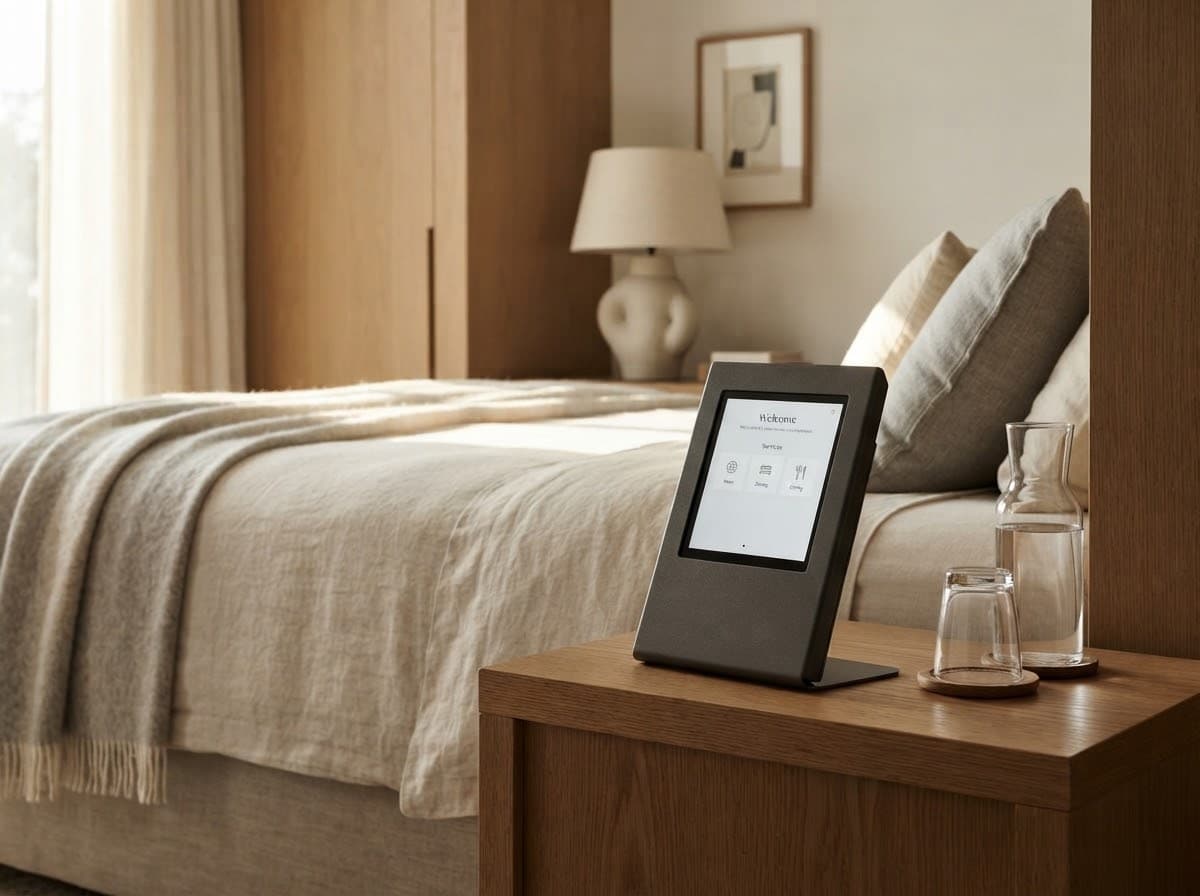
Put a discreet RoomCheck device in every room. Keep communication warm, housekeeping accountable, and reviews immaculate.
- No long-term lock-ins
- 1-minute room setup
- One device per room
- Trusted by 500+ rooms live