One unclean room can undo a quarter of the stay.
Guests rarely compliment a clean room, but they come down hard on a dirty one. Two decades of guest research explain why cleanliness behaves like a threshold — and why the bathroom is where so many stays are won or lost.
of a guest's overall satisfaction was lost when their room wasn't clean — the biggest hit of any single problem.
J.D. Power, 2014higher overall score, out of 1,000, from guests who rated cleanliness a perfect 10 rather than an 8 or 9.
J.D. Power, 2020guests would rate an otherwise perfect stay two stars or less over odour, mould, pests or stained linen.
Ecolab, 2026 · cleaning-products companyNegative reviews mention the bathroom 2.24 times as often as positive reviews do.
TrustYou, 2014 · review-analytics company
Rarely praised, always punished
Guests expect a clean room. They only notice when it isn't — and then it colours everything else.
Not the most common problem — the most damaging
Wi-Fi drops happen far more often. But when researchers weigh how much each problem costs, cleanliness comes out on top again and again.
1One failure, a quarter of the score
≈27% lostIn J.D. Power's 2014 study, an unclean room cut satisfaction by 213 points against an average score of 784. No other single problem came close.
2The gap between good and perfect
942 vs 829"Pretty clean" still costs you. In 2020, guests who rated cleanliness a perfect 10 scored their stay 942; those who gave it 8 or 9 scored 829. The last bit of polish is worth a lot.
3Health raised the stakes
2,024 hotelsAcross 26,519 reviews, guests weighted cleanliness more heavily wherever health concerns were higher (Yang, Lin & Magnini, 2024). The pandemic reset what guests look for.
In 1,992 Tripadvisor complaints about London hotels, cleanliness was a leading theme — concentrated at the lower end of the market (Sann et al., 2022).
Among 8,540 Athens hotel reviews, cleanliness was one of the two strongest causes of dissatisfaction (Giovanis & Athanasopoulou, 2018).
What guests notice — and what they write
Everything else is fine: a friendly check-in, a good bed, a great breakfast. But the review headline is about the bathroom, and the score follows it down.
The same hair is spotted on a bathroom-first check. Nobody writes "the room was clean" — but nobody writes the 2-star review either.

The details that decide the review
Odours, hair, stains, mould and pests turn a good stay into a bad review faster than anything else.
Bathrooms, smells and the post-pandemic eye
Guests don't inspect a room like a hotel inspector. They notice a short list of things that signal neglect — and lower-star properties feel it most, because their guests write mostly about tangible things like rooms, bathrooms and furnishings (Hu et al., 2019).
Most guests won't call reception about a stain. They'll mention it later, in public, where the next guest reads it.
A consistent final check catches most misses, and an easy way to report the rest turns a review into a quick fix.
Cleanliness mentions in reviews rose almost 9% in 2020 (TrustYou, vendor), and in Q3 2025 it was the only area where global review scores slipped (Shiji, vendor).
Treat clean as insurance on your score
Cleanliness doesn't earn a price premium — one meta-analysis found the cleanliness sub-score didn't predict room rates, while value and room did (Hu, Yang & Park, 2019). What it does is protect everything else you've built.
- • Spot-checking only some rooms
- • Treating smells as minor
- • Relying on guests to phone reception
- • Checking the score once a year
- • Inspect every room before check-in, bathroom first
- • Zero tolerance on odour, hair, stains, mould and pests
- • An easy way for guests to flag anything missed
- • Track the cleanliness sub-score every month
out of 10 — the all-time high average for room cleanliness, reached in 2020 (J.D. Power). Guests' expectations rose with it.
Since 2020, guests look harder — and compare you with the cleanest stay they've had.
What the research doesn't say
Where the evidence is weaker than a catchy headline would suggest.
Damaging, not frequent
In J.D. Power's 2013–2014 studies, Wi-Fi problems were twice as common as any other. Cleanliness is the most damaging problem, not the most frequent one.
The 213 points date from 2014
J.D. Power changed its scoring scale around 2022, so read the 2014 figure as about 27% of satisfaction rather than comparing it with newer point scores.
Clean protects, it doesn't earn
The cleanliness sub-score wasn't a significant predictor of room rates in a meta-analysis; the value and room sub-scores were.
Many hotels get it right
One vendor's 2024 data lists cleanliness among the most positively mentioned areas. The point is the size of the damage when it fails.
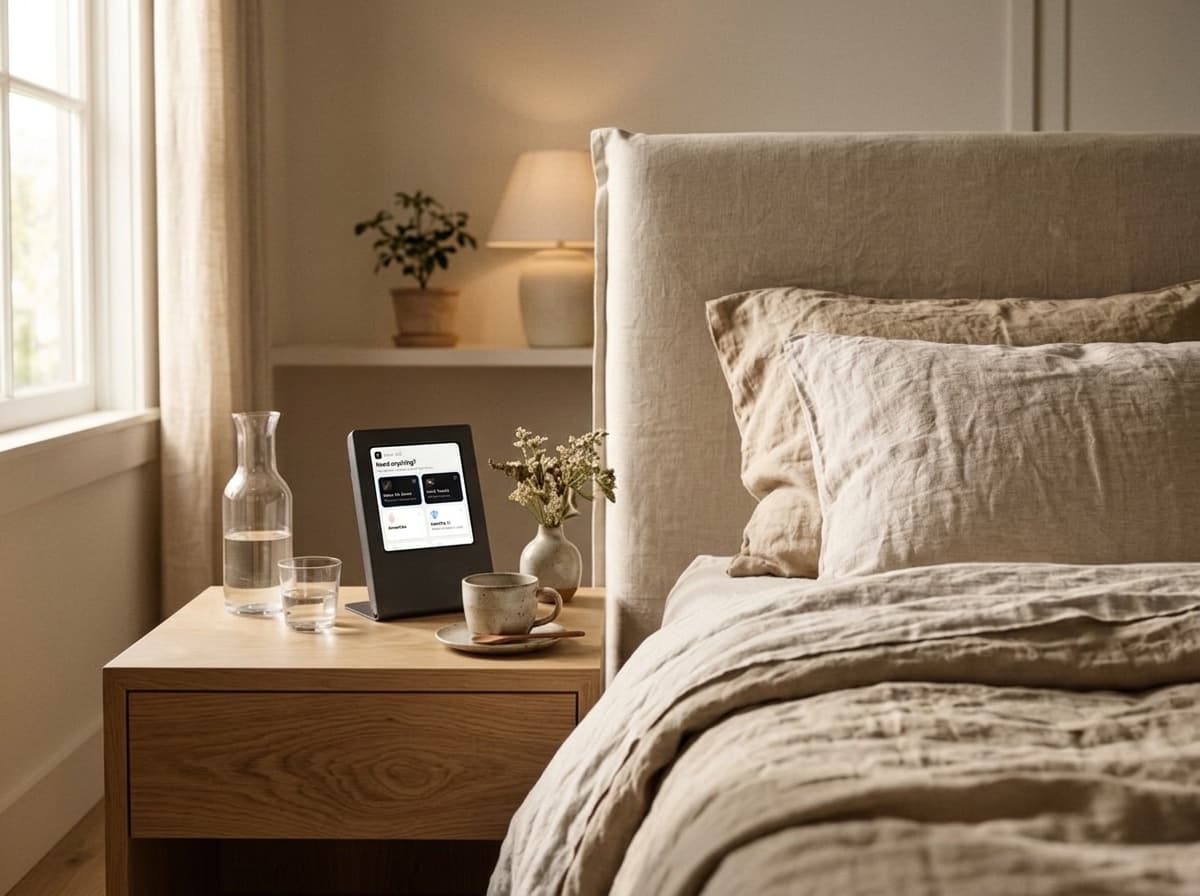
How RoomCheck helps
The research points to two moments that matter: the final check before a guest arrives, and the first hours of the stay, when anything missed can still be put right.
RoomCheck helps with the second. With a request device in the room, a guest who finds a stain, a missing towel or a smell can flag it in a couple of taps — no phone call needed — and housekeeping hears about it straight away on WhatsApp, while there's still time to fix it before checkout.
- Guests flag issues in seconds, without calling reception
- Requests go straight to housekeeping
- Fixes happen during the stay, not after the review
Industry research sources
J.D. Power studies
• J.D. Power (2013). North America hotel guest satisfaction study: Wi-Fi and problem frequency.
• J.D. Power (2014). North America hotel guest satisfaction study: the cost of an unclean room.
• J.D. Power (2020). Cleanliness and communication continue to drive hotel guest satisfaction.
• J.D. Power (2024). What hotel study data can tell you.
Academic research
• Yang, Lin & Magnini (2024). Do guests care more about hotel cleanliness during COVID-19?.
• Sann et al. (2022). Complaint themes in 1,992 London hotel reviews.
• Giovanis & Athanasopoulou (2018). Dissatisfaction in 8,540 Athens hotel reviews (conference paper).
• Hu et al. (2019). Hotel complaints by star class in online reviews.
• Hu, Yang & Park (2019). A meta-regression on the effect of online ratings on hotel room rates.
Industry & vendor data
• Ecolab (2026). Hotel cleanliness: impact on hotel guest satisfaction.
• TrustYou (2014). Understanding bad reviews.
• TrustYou (2021). A clean sweep: cleanliness and hotel scores.
• Shiji (2025). How global hotels sustained guest satisfaction in Q3 2025.
• ReviewPro (2024). What guest reviews tell us about hospitality in 2024.
More from the research series
The silent majority: most unhappy guests never tell you
Your unhappy guests won't tell you, but they will tell Booking.com. Why guests stay silent, and what makes them speak up.
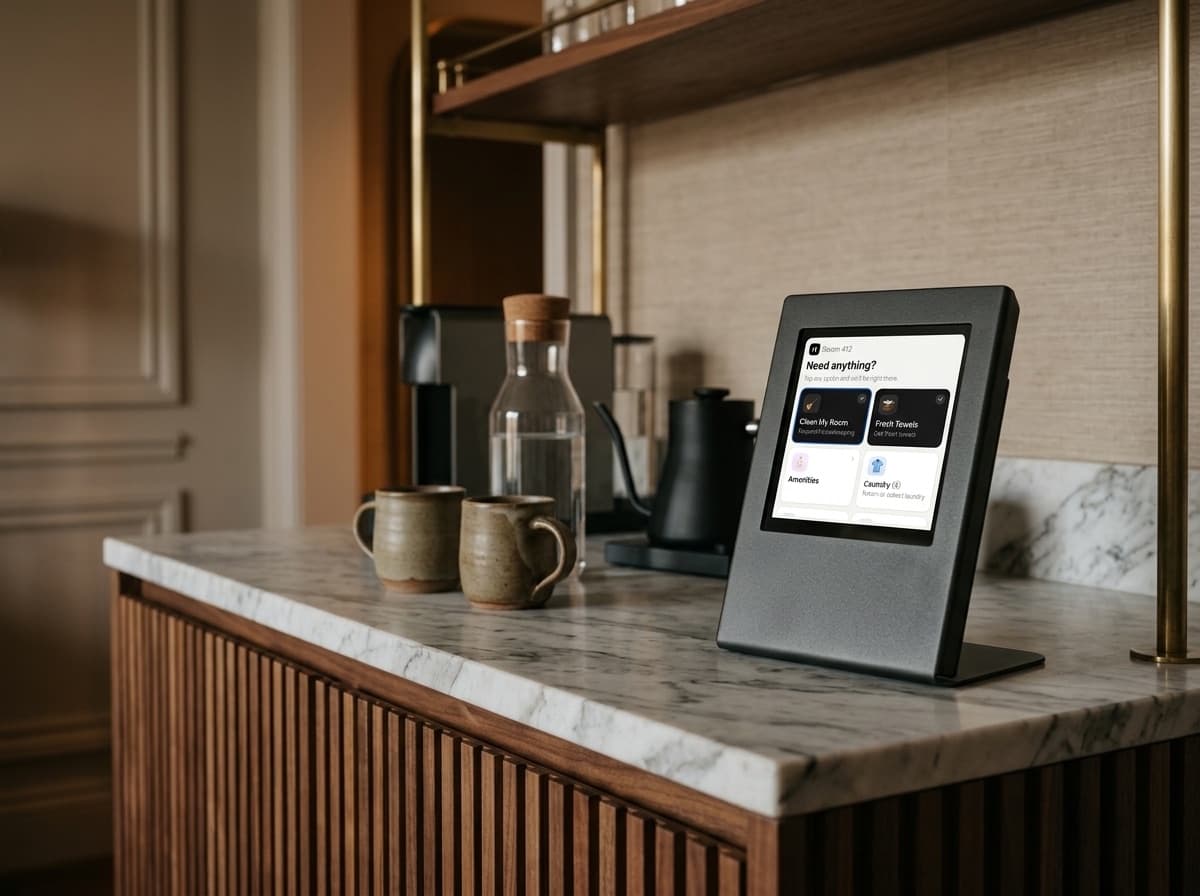
The 12-minute window: how a fast, personal response wins guests back
How long guests wait before frustration sets in, why acknowledging a request matters as much as fixing it, and what to say first.
The button you never press: why feeling able to ask matters
Why knowing you can ask makes guests feel better, the effort barrier behind silent complaints, and how guests prefer to reach you.
Ready to catch guest friction before it hits Booking.com?
Put a discreet RoomCheck device in every room. Keep communication warm, housekeeping accountable, and reviews immaculate.
- No long-term lock-ins
- 1-minute room setup
- One device per room
- Trusted by 500+ rooms live