Review scores aren't fixed. You can move them.
Two simple habits — asking every guest for a review, and replying well to the negative ones — measurably raise both the number of reviews and the score. Here's what works, and what backfires.
more reviews a month for hotels that asked every guest — and ratings 0.15 stars higher.
Gao et al., 2025higher ratings, and 12% more reviews, once hotels started replying to reviews.
Proserpio & Zervas, 2017Replying to more than 85% of reviews did worse than not replying at all, in a study of 80 hotels.
Anderson & Han, Cornell, 2016of travellers focus on the most recent reviews when choosing where to stay.
Tripadvisor/Ipsos, 2019 · commissioned
A steady flow beats a big total
Recent reviews matter more — to guests and to booking platforms — than a large, old pile.
Asking is the strongest single lever
Most happy guests never think to leave a review. Asking changes who writes them — and the score follows.
1Ask every guest
+34% reviewsHotels in Tripadvisor's review-request programme gained 34.3% more reviews a month and ratings 0.151 higher. Small, cheaper and lower-rated hotels gained most (Gao et al., 2025).
2Ask by hand at checkout
7.32 vs 6.77Guests asked to handwrite a comment at checkout later rated the hotel 7.32 on Booking.com, against 6.77 for those who weren't (Tassiello et al., 2018).
3Say thank you, briefly
Next stayA short thank-you after a stay made guests more likely to review after their next stay; overly detailed messages may backfire (Anderson & Han, 2021).
In the same programme, unprompted reviews fell 15.5% and requested reviews were 16.9% shorter (Gao et al., 2025).
83% of consumers who were asked to leave a review did so (BrightLocal, 2026).
What future guests read
"We have hundreds of happy guests and have never had this complaint before…" In a Tripadvisor-commissioned survey, 70% of travellers were put off by defensive replies.
Acknowledge, restate the concern, explain what changed, invite them back. Empathy and restating the concern mattered; reply speed didn't (Min, Lim & Magnini, 2015).

Fresh reviews matter most
Booking.com weights recent reviews more heavily, and older ones may stop showing after 36 months. A steady flow beats a big old total.
Reply selectively, not to everything
Replies to negative reviews show future guests that problems are taken seriously, and later ratings improve (Wang & Chaudhry, 2018) — mainly among the least satisfied guests (Gu & Ye, 2014). But replying to everything, especially positive reviews in a promotional tone, can backfire.
Revenue rose with response rate up to about 40% of reviews, then levelled off; above 85% it did worse than no replies (Anderson & Han, 2016 — 80 hotels, so treat it as guidance).
Across 1,045 hotels, responding was linked to a 0.235-star rise and 17% more later reviews (Xie et al., 2016).
Hotels worldwide answered 68.8% of reviews in 2025, taking 3.5 days on average (Shiji, 2026, vendor).
A simple review routine
The effects are modest — about 0.1–0.2 stars from replying and about 0.15 from asking — but they add up, and they're within every property's control. Check each platform's rules first: incentivised or selectively solicited reviews are restricted.
- • Arguing with reviewers in public
- • Promotional replies to positive reviews
- • Replying to almost everything
- • Offering incentives for reviews
- • Ask every guest, at checkout and in a short follow-up
- • Reply personally to every negative review
- • Reply briefly to a selection of positives
- • Keep reviews flowing on Booking.com and Google
of all hotel reviews come from Booking.com and Google (Shiji, Q2 2026, vendor) — focus your effort there.
Google says more reviews and positive ratings can help a business's local ranking.
What the research doesn't say
Where the evidence is weaker than a catchy headline would suggest.
The effects are modest
About 0.1–0.2 stars from responding and about 0.15 from asking. Real, but not transformational on their own.
Some figures are commissioned
Several traveller-attitude figures come from surveys commissioned by Tripadvisor.
The thresholds are guidance
The 40% and 85% response-rate thresholds come from a study of 80 hotels, not a universal rule.
Follow platform rules
Platforms restrict incentivised or selectively solicited reviews. Check each policy before a review drive.
How RoomCheck helps
The best review strategy is fewer reasons for bad reviews in the first place. Asking and replying work best when the stay itself went well.
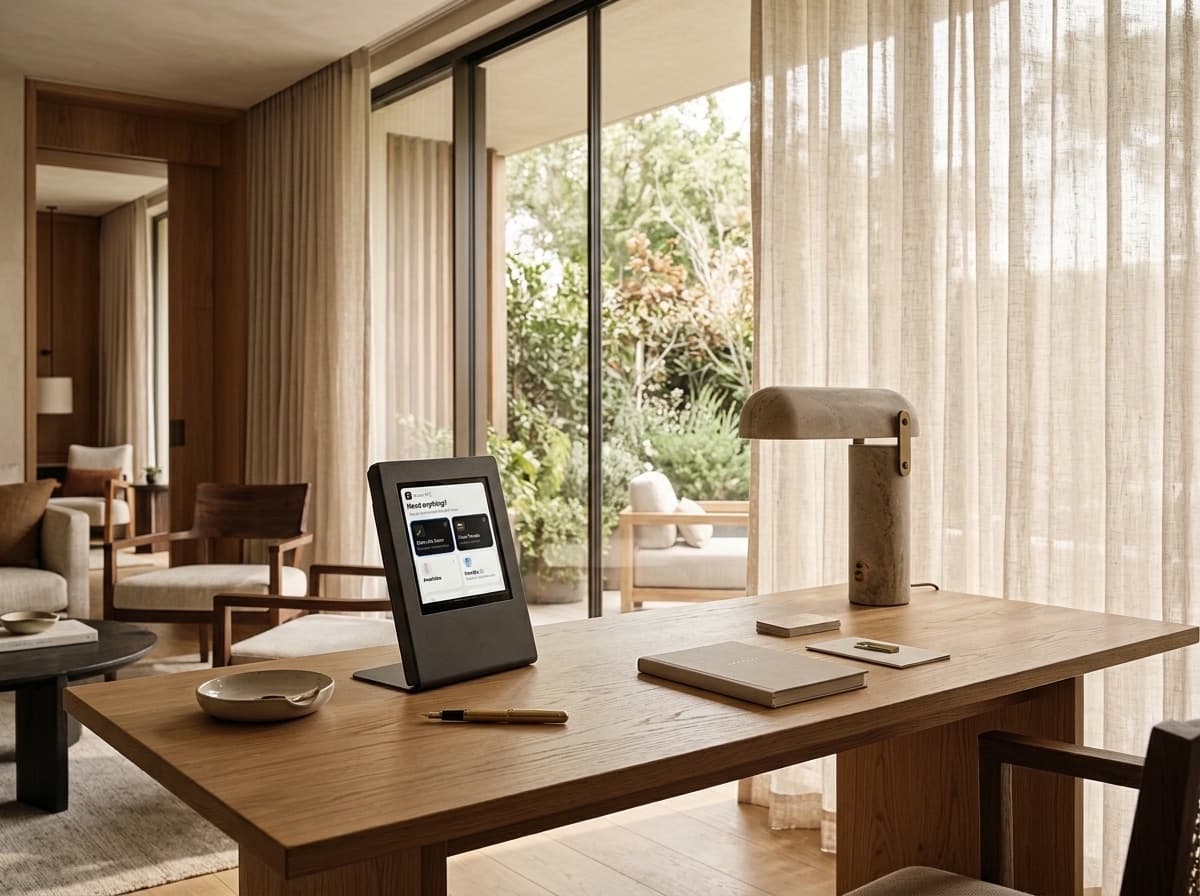
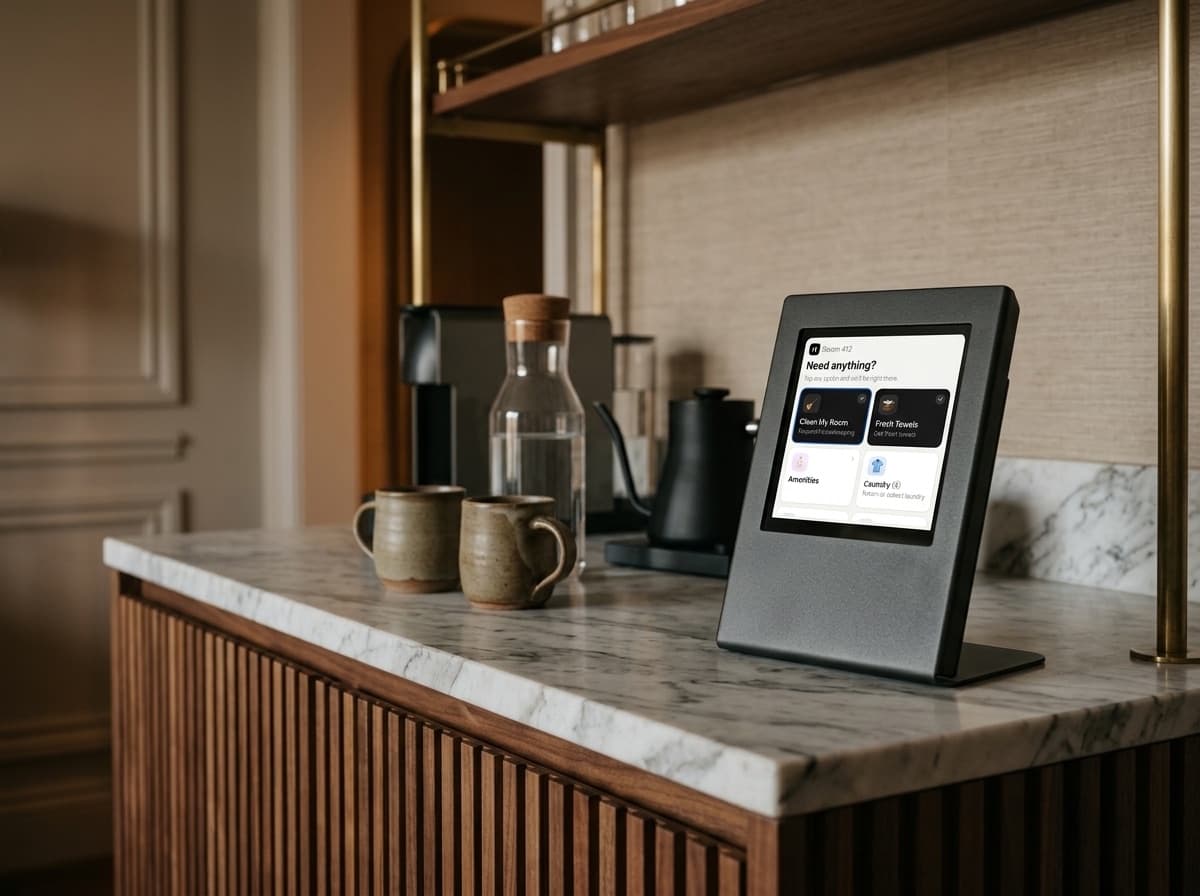
RoomCheck makes it easy for guests to raise problems during the stay, so by the time you ask for a review at checkout, issues have usually been dealt with — and you're asking guests whose problems were solved.
- Problems surface during the stay
- Fixed before the review request
- Ask with confidence at checkout
Industry research sources
Asking & answering research
• Gao et al. (2025). Review solicitation on Tripadvisor, Management Science.
• Tassiello et al. (2018). How handwriting reduces negative online ratings.
• Anderson & Han, Cornell (2021). Customer engagement and long-term loyalty.
• Anderson & Han, Cornell (2016). How hotels benefit from responding to reviews.
• Askalidis & Malthouse (2016). Solicited vs unsolicited reviews (not peer-reviewed).
Review response studies
• Proserpio & Zervas (2017). Online reputation management: management responses, Marketing Science.
• Xie et al. (2016). Management responses and hotel performance.
• Wang & Chaudhry (2018). When and how managers' responses to reviews affect later reviews, Journal of Marketing Research.
• Gu & Ye (2014). First step in social media: measuring the influence of online management responses.
• Min, Lim & Magnini (2015). Empathy and speed in replies to online reviews.
Platform & industry data
• Tripadvisor/Ipsos (2019). Online reviews remain a trusted source when booking trips (commissioned).
• Tripadvisor/Ipsos (2019). Traveller attitudes to management responses (commissioned).
• Tripadvisor/PhoCusWright (2014). Traveller reactions to review replies (commissioned).
• Tripadvisor (2014). Responding to reviews drives booking enquiries.
• BrightLocal (2026). Local consumer review survey.
• Shiji (2026). Worldwide guest satisfaction climbs again.
• Shiji (Q2 2026). Q2 2026 guest experience benchmark.
• Booking.com (n.d.). How we work.
• Google (n.d.). Tips to improve your local ranking.
More from the research series

The 27% problem: why an unclean room hurts more than anything else
One unclean room can cost about a quarter of a guest's satisfaction. Why cleanliness works like a threshold, and why bathrooms decide so many reviews.
The silent majority: most unhappy guests never tell you
Your unhappy guests won't tell you, but they will tell Booking.com. Why guests stay silent, and what makes them speak up.
The 12-minute window: how a fast, personal response wins guests back
How long guests wait before frustration sets in, why acknowledging a request matters as much as fixing it, and what to say first.
Ready to catch guest friction before it hits Booking.com?
Put a discreet RoomCheck device in every room. Keep communication warm, housekeeping accountable, and reviews immaculate.
- No long-term lock-ins
- 1-minute room setup
- One device per room
- Trusted by 500+ rooms live